

Tesla is on the verge of setting a new Australian annual sales record. The brand needs just 362 more deliveries to beat its 2023 benchmark of 46,116 — with two months of 2026 still to run.
That alone wouldn't be remarkable. What makes this a story is where it comes from: two consecutive years of decline that had many observers writing Tesla's Australian chapter early. Deliveries fell 16.8% in 2024 and another 24.8% in 2025. This year, they're up 94.1%.
The October figures, published by the Electric Vehicle Council (EVC) and reported by EV Central, show a brand that has stopped sliding — even in its quietest month since April.
The Comeback in Numbers
|
Year |
Tesla deliveries (Australia) |
Change |
|
2023 |
46,116 (record) |
— |
|
2024 |
38,347 |
−16.8% |
|
2025 |
28,856 |
−24.8% |
|
2026 (Jan–Oct) |
45,755 |
+94.1% vs same period 2025 |
Two data points put the recovery in perspective:
- Tesla's year-to-date total has already exceeded all of 2025 by 58.6% — with November and December still to come.
- October's 4,050 deliveries were down 28.4% from September, yet 342% higher than the 916 cars delivered in October 2025.
October's Dip Is Timing, Not Demand
The headline decline needs context. Tesla's monthly volumes in Australia have moved in waves all year — June's 8,670 was the peak, followed by August's 7,685 and September's 5,654. October's 4,050 is the sixth-biggest month of 2026, not a collapse.
Part of the pattern is structural: the EVC records vehicles at the point of delivery, not when orders are placed, so quarter-end and campaign-driven delivery clusters shape the monthly graph. October also marked the second consecutive monthly decline, which is worth watching — but a 342% year-on-year gain in the same month tells you which direction the trend actually runs.
The Model Y Family Is Carrying the Record
The Model Y series delivered 3,105 vehicles in October — including 1,010 examples of the six-seat Model Y L, the extended-wheelbase version that launched in Australia this year.
The family's year-to-date total stands at 39,035, up 117.2% on the same point in 2025, and it now accounts for 85.3% of everything Tesla sells in Australia. The Model Y L alone contributed 8,439 deliveries between July and October, peaking at 3,236 in August.
The Model 3 has quietly recovered too: 945 October deliveries, its third-biggest month of the year, helped by a new cheaper entry-level variant. Its year-to-date total of 6,720 is up 20.1%.
The lesson is straightforward: Tesla's Australian rebound tracks its product and pricing moves — a longer, six-seat Model Y for families, and a sub-$46,000 entry point on the Model 3 — far more than any shift in EV sentiment.

What It Means for Australia's EV Market
Charging demand is compounding. Whatever one thinks of the brand, tens of thousands of additional Teslas on Australian roads means tens of thousands of new households working out how to charge conveniently and cheaply. For new owners navigating plugs, current ratings and cable lengths, our guide to choosing a portable Type 2 EV charger in Australia covers the essentials — Australian Teslas use the Type 2 connector for AC charging, and the right portable unit makes overnight charging routine rather than a project.
Competition is arriving just as fast. Tesla's record chase is happening while Chinese brands scale in Australia — and XPeng's G9L arrives in 2027 with ultra-fast charging as its headline feature. The volume leaders of 2026 are defending their position against exactly the kind of value-and-technology combination that dragged Tesla's own sales down in 2024–25. Australian buyers are the beneficiaries either way.
Polestar Is Heading the Other Way
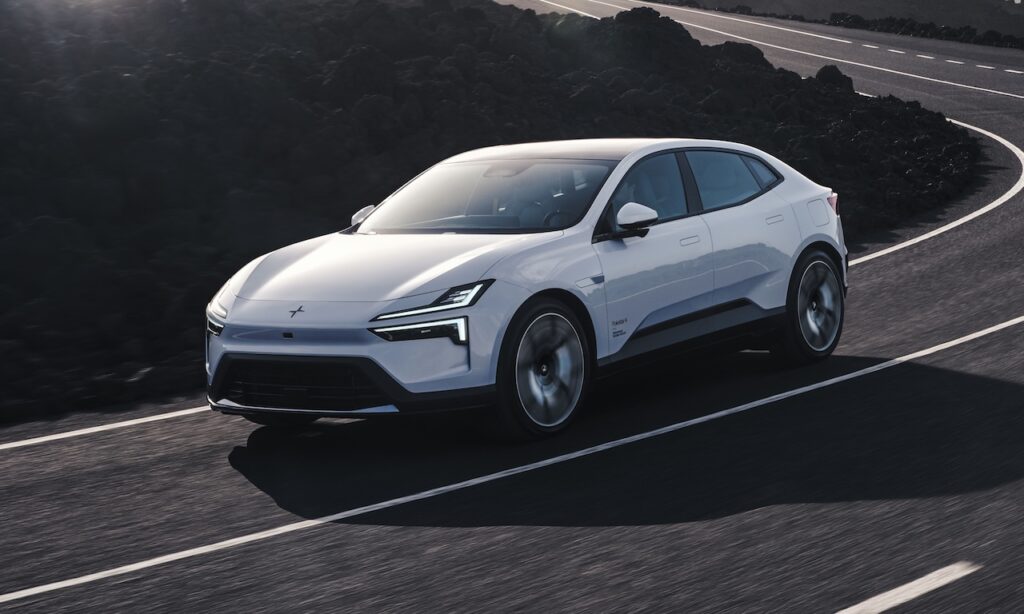
The EVC's two-brand report shows a sharp contrast: Polestar delivered just 118 vehicles in October, down 23.4%, taking its year-to-date total to 1,799 — down 11.0%. The Polestar 4 supplied 79 of October's deliveries; the Polestar 5 managed one.
Same market, same month, opposite trajectories — a reminder that in Australia's maturing EV market, model refreshes and pricing are doing more work than any general "EV demand" narrative.
Will the Record Fall?
Barring something extraordinary, yes. Tesla needs 362 deliveries across November and December — months in which it has never delivered fewer than 1,300 vehicles in the EVC series. Even at October's reduced pace, the record falls in the first half of November.
The more interesting number to watch is the final margin. A record set by a few hundred cars tells one story about 2026; a record set by 5,000 or more tells a different one about how far Australia's EV market has moved since the 2023 peak — and how much of that shift is now permanent.
FAQ
How close is Tesla to its Australian sales record?
As of the end of October 2026, Tesla had delivered 45,755 vehicles for the year — 362 short of the 46,116 record set in 2023, with two months remaining.
Why did Tesla's Australian sales fall in 2024 and 2025?
Deliveries declined 16.8% in 2024 and 24.8% in 2025 amid an ageing line-up, intensifying competition from Chinese brands and delivery timing effects. The 2026 recovery tracks the Model Y L launch and a cheaper entry-level Model 3.
What is the Tesla Model Y L?
An extended-wheelbase, six-seat version of the Model Y launched in Australia in 2026. It has contributed 8,439 deliveries from July to October and is a major driver of Tesla's 94.1% year-to-date growth.
Who publishes the Australian Tesla sales figures?
The Electric Vehicle Council (EVC), which records Tesla and Polestar deliveries at the point of delivery rather than when orders are placed. Most other brands report through the FCAI's VFACTS system.