

When people compare electric cars, they argue about batteries. The motor barely gets a mention. That's a shame, because as InsideEVs explains in its motor-type primer, not all EV motors are built the same way — and automakers routinely use two or three different designs on the same vehicle.
The core question: where does the spinning part of the motor get its magnetism? Three mainstream answers exist, and each shapes how efficient, how compact, and how rare-earth-dependent a car is.
The Three Main EV Motor Types at a Glance
|
Motor type |
Full name |
Rotor's magnetic field |
Key strength |
Key trade-off |
|
PMSM |
Permanent-magnet synchronous |
Fixed permanent magnets |
Highest efficiency; compact |
Rare-earth dependence |
|
Induction |
(Asynchronous) |
Induced by stator current |
Magnet-free; near-zero drag when idle |
Rotor heat; lower efficiency |
|
EESM |
Electrically excited synchronous |
Powered rotor coils |
Adjustable field; magnet-free |
Excitation costs energy; complexity |
First, What Makes an EV Motor Spin?
Every EV motor has two main parts: a stationary outer ring called the stator and a rotating inner section called the rotor. The battery supplies direct current (DC), but an inverter converts it into controlled alternating current (AC) and feeds the stator's coils in sequence, creating a rotating magnetic field — a magnetic pull circling the motor while the rotor chases it.
The terminology hinges on whether the rotor keeps up. A synchronous motor spins at the same speed as that rotating field; permanent-magnet and electrically excited motors belong to this family. Induction motors work with a deliberate speed difference between the two.

Permanent-Magnet Motors: The Efficiency Default
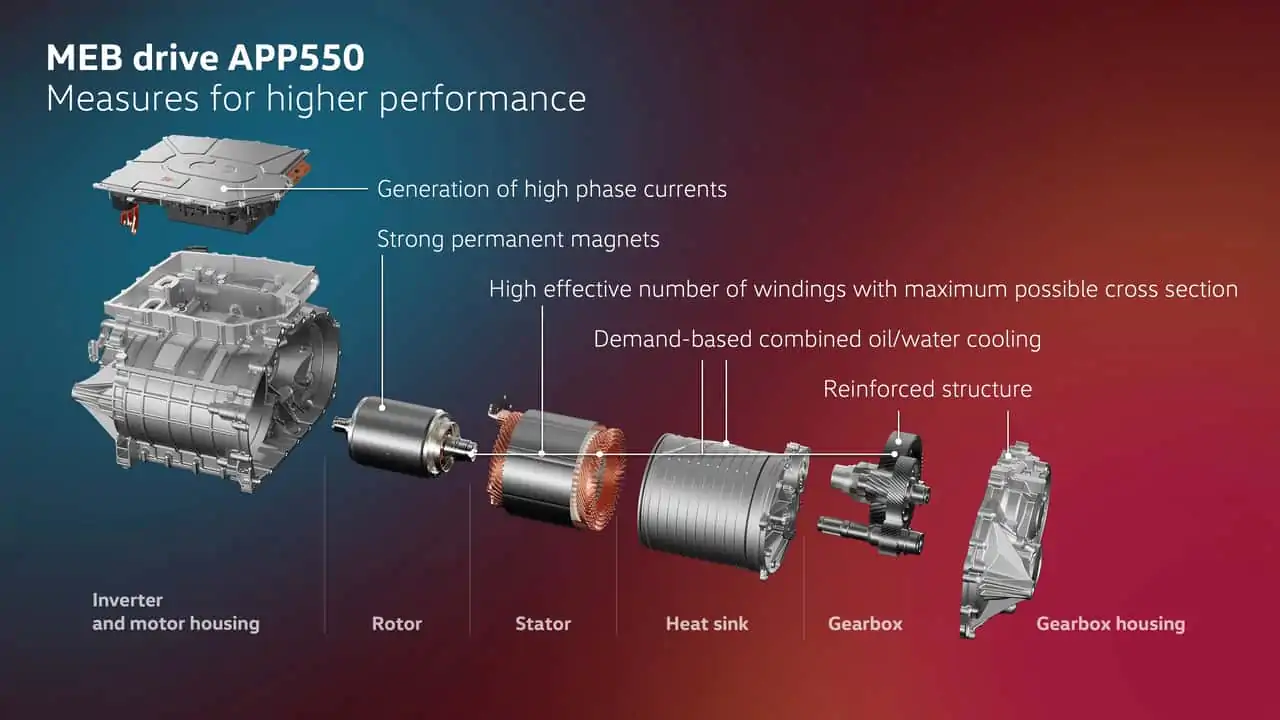
In a permanent-magnet synchronous motor (PMSM), magnets embedded in the rotor provide the field with no electrical supply of their own — the stator's rotating field simply pulls the rotor around.
Because the rotor's magnetism is free, there are no losses from energizing rotor windings. That is why PMSM units deliver high efficiency and strong power from a compact, relatively light package — and why most EVs use one as their main drive motor.
The catch sits in the magnets themselves. The powerful magnets used in automotive motors typically contain rare-earth elements, exposing manufacturers to sourcing challenges and price swings. "Permanent magnet" doesn't automatically mean "rare earth," but that is the material choice behind most automotive PMSMs.
Induction Motors: Magnet-Free, But Always Chasing
An induction motor — also called asynchronous — replaces magnets with conductive bars inside the rotor, joined at both ends by rings. The layout resembles a rodent's exercise wheel, hence the nickname "squirrel cage."
The stator's moving magnetic field induces current in those bars, and that current creates the rotor's own field. No magnets, no electrical connection to the rotor. But the rotor must turn slightly slower than the stator's field — that gap is called slip, and it keeps current, and torque, flowing. If the rotor ever fully caught up, induction would stop.
The trade-offs run both ways. Inducing current in the rotor produces heat and costs efficiency, which is why induction motors rarely serve as the primary drive. But an unpowered induction motor spins with very little drag — an ideal second motor. Audi uses exactly this logic on the Q6 e-tron quattro: an efficient permanent-magnet motor at the rear, a low-drag induction motor at the front for extra propulsion when needed. Many Tesla and GM all-wheel-drive EVs follow the same pattern.
Electrically Excited Motors: Make the Magnet Adjustable
The third approach, the electrically excited synchronous motor (EESM), fits the rotor with powered coils — an electromagnet whose strength engineers can adjust on the fly. It doesn't depend on slip the way an induction motor does, and its field isn't fixed like a PMSM's.
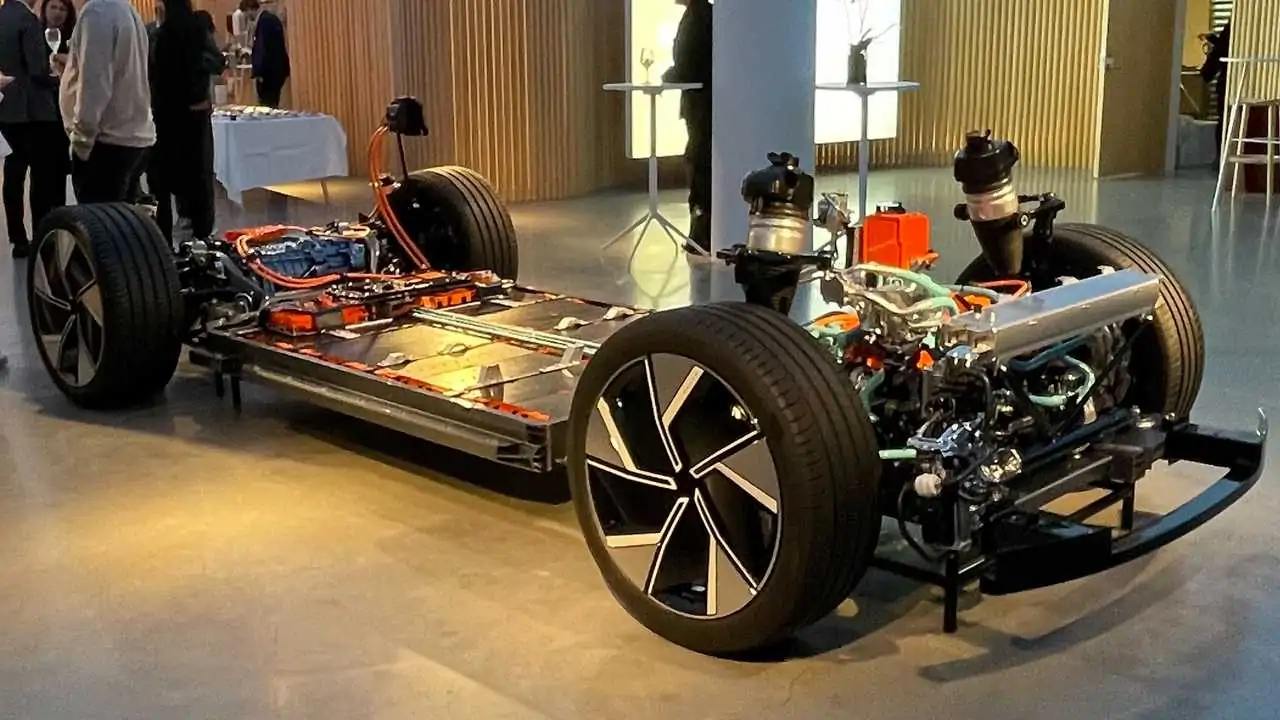
That adjustability is the appeal. BMW's sixth-generation eDrive pairs it with an induction motor in the new iX3 — the official release describes a high-efficiency EESM on the rear axle and a compact asynchronous motor on the front, with energy losses down 40 percent versus the previous generation. Renault chose the same path for a different reason: its official technical publication details the magnet-free wound-rotor motor used across its E-Tech lineup, including the Renault 5 E-Tech — explicitly to cut reliance on rare earths and magnet suppliers.
The compromise: energizing the rotor consumes electricity, and the windings and power supply add complexity. Avoiding permanent magnets never comes free.
Why Automakers Refuse to Pick Just One
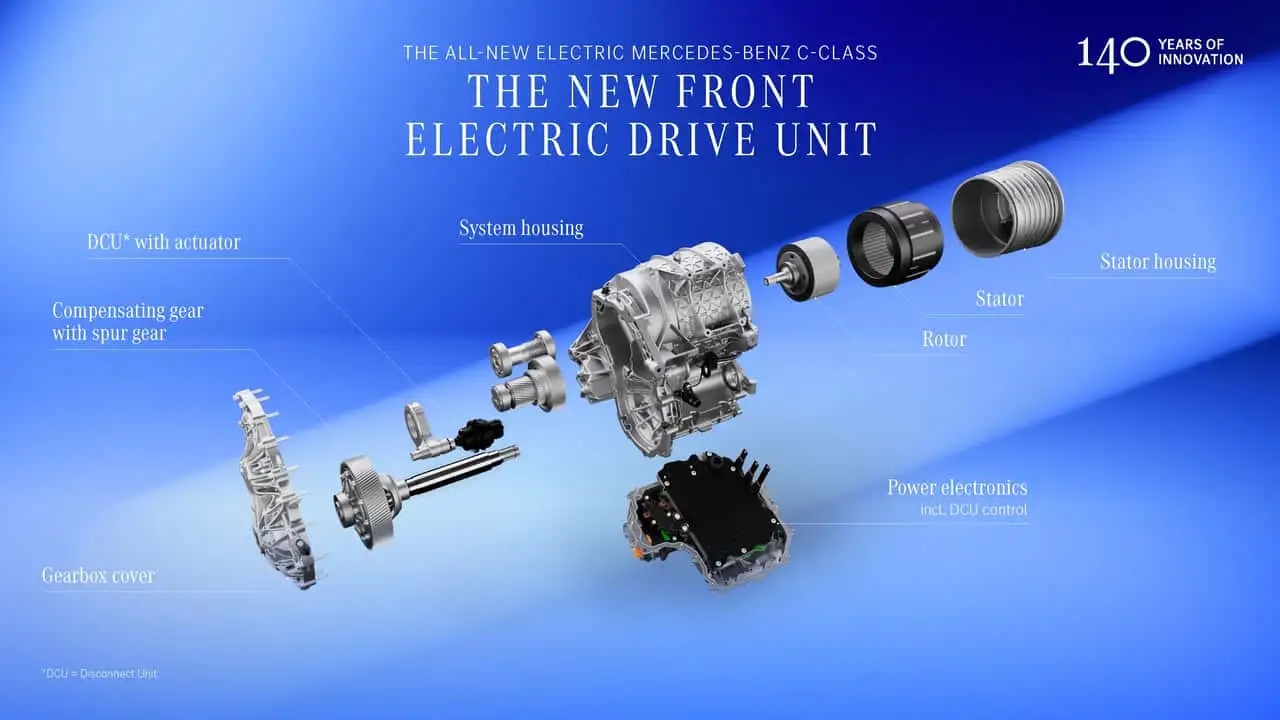
Automakers deliberately mix these designs. Mercedes-Benz goes a step further than a second motor type: its permanent-magnet front motor can mechanically disconnect from the wheels when unused, avoiding drag entirely. Choosing a motor, it turns out, is as much about saving energy when the motor isn't needed as making power when it is.
What This Actually Means for EV Owners
Here's the honest part: you cannot read a badge and predict a car's range. Real-world efficiency depends on how the motor is calibrated and paired with the battery, gearing, and thermal systems — two cars with the same motor type can post very different consumption numbers.
But motor design does explain three things you'll notice:
- Why some all-wheel-drive EVs feel "invisible" in front-axle mode. Low-drag induction motors and disconnectable drives cost you nothing until you ask for traction.
- Why rare-earth headlines affect some cars and not others. Renault's E-Tech family and BMW's EESM designs were chosen specifically to sidestep magnet sourcing risk.
- Why your charging routine matters more than your motor. Efficiency decides how many kilowatt-hours you draw from the wall per 100 kilometers — which makes the equipment between your outlet and the car worth getting right. Our portable EV chargers work with standard outlets worldwide, and our EV battery types and charging habits guide covers the other half of the efficiency equation.
And when you lift off the accelerator, all three motor types do the same job: they run backwards as a generator. That's regenerative braking — we've broken down how much energy it actually recovers.
Final Thoughts
EV motors are not interchangeable black boxes. Permanent-magnet designs buy efficiency with rare-earth exposure; induction designs buy robustness with rotor losses; electrically excited designs buy flexibility with added hardware. The most interesting EVs don't choose — they pair two motors and let software decide which one earns its keep.
FAQ
What are the three main types of EV motors?
Permanent-magnet synchronous motors (PMSM), induction (asynchronous) motors, and electrically excited synchronous motors (EESM). They differ in how the rotor gets its magnetic field: fixed magnets, induced current, or powered coils.
Does the motor type affect an EV's range?
Indirectly. PMSMs are generally the most efficient choice for the main drive, while induction motors lose some energy to rotor heat. But real-world range depends on the whole powertrain's calibration, so two vehicles with the same motor type can still differ.
Why do many all-wheel-drive EVs use two different motor types?
The main axle gets an efficient permanent-magnet motor; the secondary axle gets an induction motor (or a disconnectable drive) that adds traction when needed but spins with almost no drag when idle. Audi, Tesla, GM, BMW, and Mercedes-Benz all use variations of this strategy.
Do electric car motors use rare earth magnets?
Permanent-magnet motors typically do, which creates sourcing and price risks. Induction and electrically excited motors avoid permanent magnets entirely — which is why Renault and BMW have adopted wound-rotor designs.
What is "slip" in an induction motor?
Slip is the small speed difference between the stator's rotating magnetic field and the rotor. It's necessary: current is only induced in the rotor bars while the rotor trails the field. If the rotor matched the field's speed exactly, torque would drop to zero.