

You pull into a hotel parking lot after a long drive and realize there's no charger nearby. Or your home wallbox stops working the night before a big trip. Or maybe you rent your home and simply can't install permanent charging equipment.
These situations happen more often than most new EV owners expect. That's exactly where a portable EV charger comes in.
But what is a portable EV charger, exactly, and is it actually worth buying? This guide walks through everything you need to know before choosing one.
What Is a Portable EV Charger?
A portable EV charger, also called a portable EVSE (Electric Vehicle Supply Equipment), is a compact charging unit that plugs into a standard power outlet and delivers AC power to your vehicle. Unlike a wall-mounted charger, it isn't fixed in place — you can store it in your trunk, move it between locations, or lend it to a family member.
The main difference between a portable charger and a typical "home charger" is intent. Many home chargers are hardwired wallboxes, permanently installed by an electrician. A portable unit is designed to move with you.
Compared to a wallbox, a portable charger is:
- Easier to set up (usually plug-and-play)
- Movable between homes, garages, or road trips
- A practical backup if your main charger fails
It's not meant to replace a wallbox for every driver — but for many EV owners, it's a flexible middle ground between public charging and a permanent installation.
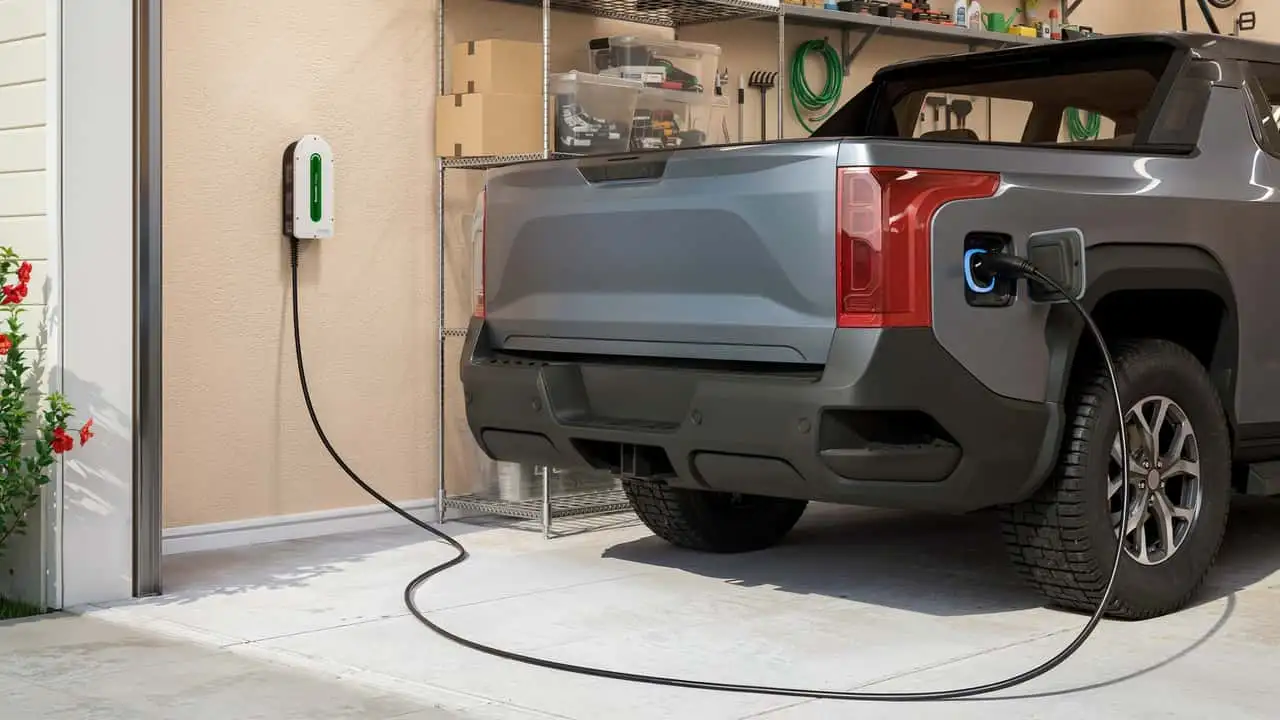
How Does a Portable EV Charger Work?
The charging path is simple in concept:
Power source → Portable EV charger → Charging cable → Vehicle
The charger draws AC power from an outlet, communicates with your car's onboard charger, and controls how much current flows into the battery. Your vehicle's onboard charger — not the portable unit itself — ultimately converts AC to DC and manages the charging process, which is why two different EVs can charge at different speeds from the same charger.
Portable EV Charger vs. Home Wallbox
| Factor | Portable EV Charger | Home Wallbox |
|---|---|---|
| Portability | Easy to move and travel with | Fixed in one location |
| Installation | Minimal, often just plug-in | Usually requires an electrician |
| Charging Speed | Typically up to 7.4kW on single-phase | Can go higher, including 11kW or 22kW where three-phase supply is available |
| Cost | Generally lower upfront cost | Higher due to installation |
| Flexibility | Works across multiple locations | Limited to installed site |
| Best Use Case | Travel, backup, renters, multi-location charging | Daily home charging at one fixed spot |
Both columns depend on your electrical supply and vehicle. Neither a portable charger nor a wallbox will deliver its top-line number unless the outlet, wiring, and onboard charger all support it.
Neither option is universally "better." A wallbox suits drivers who charge at the same location every night and want the fastest possible home speed. A portable charger suits drivers who value flexibility, travel often, or don't have the option to install fixed equipment.
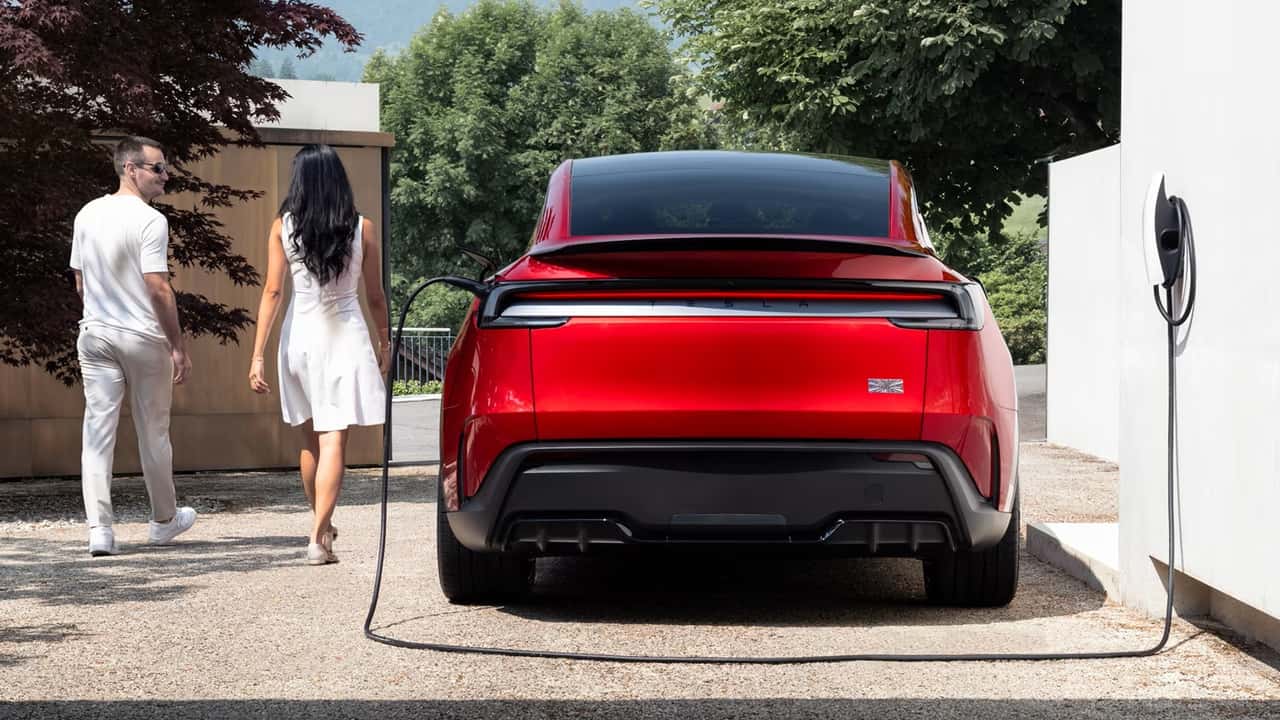
How Fast Can a Portable EV Charger Charge an EV?
Charging speed depends on current (amps) and power (kW). Common ratings include:
- 10A — roughly 2.3kW
- 16A — roughly 3.6kW
- 20A — roughly 4.6kW
- 24A — roughly 5.5kW
- 32A — up to roughly 7.4kW on single-phase in theory
These figures are theoretical maximums for single-phase AC power. A specific charger's actual rated output (for example, 7.2kW instead of 7.4kW) can be slightly lower depending on how the manufacturer has calibrated the unit, so it's worth checking the product's own spec sheet rather than assuming the textbook number applies exactly. For general background on Level 1 and Level 2 charging rates, the U.S. Department of Energy's Alternative Fuels Data Center is a useful reference point.
Some regions also support three-phase residential power, which can push totals to 11kW or 22kW. This is far more common in parts of Europe than in North America, where most homes only have single-phase service, so three-phase totals won't apply to most U.S. or Canadian drivers.
It's important to understand that the charger's rated power is not a guarantee of actual charging speed. Real-world speed also depends on:
- Your vehicle's onboard charger limit
- The power supply and circuit capacity
- The outlet and socket rating
- The current you select
- The condition and rating of the cable
- Your home's electrical installation
A 7kW-rated charger will not push 7kW into a car whose onboard charger maxes out lower, and it won't safely run at full power through an underrated outlet. Speed is always the lowest common denominator across the whole system. If you want to size charging power to your actual home setup rather than the maximum on paper, our separate guide on how many kW you need for home EV charging walks through that in more detail.
What Should You Look for When Buying a Portable EV Charger?
- Charging current – Determines how much power can flow; needs to match your outlet and wiring.
- Charging power (kW) – Affects how quickly your battery fills; useful for planning charging time.
- Connector type – Must match your vehicle's inlet (commonly Type 2 or J1772, depending on region).
- Adjustable current – Lets you safely charge on different outlets, from a standard socket to a higher-rated one.
- Plug type – Needs to match your regional wall outlet standard.
- Cable length – A short cable can be inconvenient depending on where your charging port and outlet are located.
- Weather resistance – Relevant if you'll ever charge outdoors or in a driveway exposed to rain.
- Safety protection – Built-in protections reduce risk during charging (more below).
- Display / charging info – Helps you monitor current, power, and charging status at a glance.
- Scheduling function – Useful for charging during off-peak electricity hours.
- Certifications – Look for recognized safety certifications relevant to your country.
- Warranty – A longer warranty generally reflects manufacturer confidence in the product.

What Amperage Should You Choose?
- 10A – Best for occasional, low-power backup charging or older/light-duty outlets.
- 16A – A common middle-ground choice for many household outlets.
- 24A – Useful where your circuit supports it and you want faster charging without needing a dedicated high-power line.
- 32A – Suited for drivers with a compatible high-capacity outlet and vehicle that can accept it.
A 32A rating does not mean every household outlet can handle it. Outlet ratings, wiring gauge, and circuit breaker capacity all matter. In the U.S., residential electrical work is generally governed by the National Electrical Code (NFPA 70), and other countries have their own equivalent standards — before using higher current settings, confirm your local requirements and outlet rating, and consult a qualified electrician if you're unsure.
If you're specifically weighing 16A against 32A, our dedicated comparison, 16A vs 32A EV charger: what's the difference, breaks down real-world charging time differences in more depth.
Is a Portable EV Charger Safe?
Reputable portable EV chargers include several built-in protections, such as:
- Overcurrent protection
- Overvoltage protection
- Leakage / residual current protection
- Overtemperature protection
- Ground fault protection
- IP-rated weather protection (for outdoor exposure)
These protections meaningfully reduce risk, but they work alongside your home's wiring and outlet condition, not instead of them. A well-built charger plugged into an outlet that's old, overloaded, or incorrectly wired is still a risk. Check for relevant certifications in your country, and if you're unsure about your home's wiring, have it inspected by a licensed electrician before relying on higher current settings.
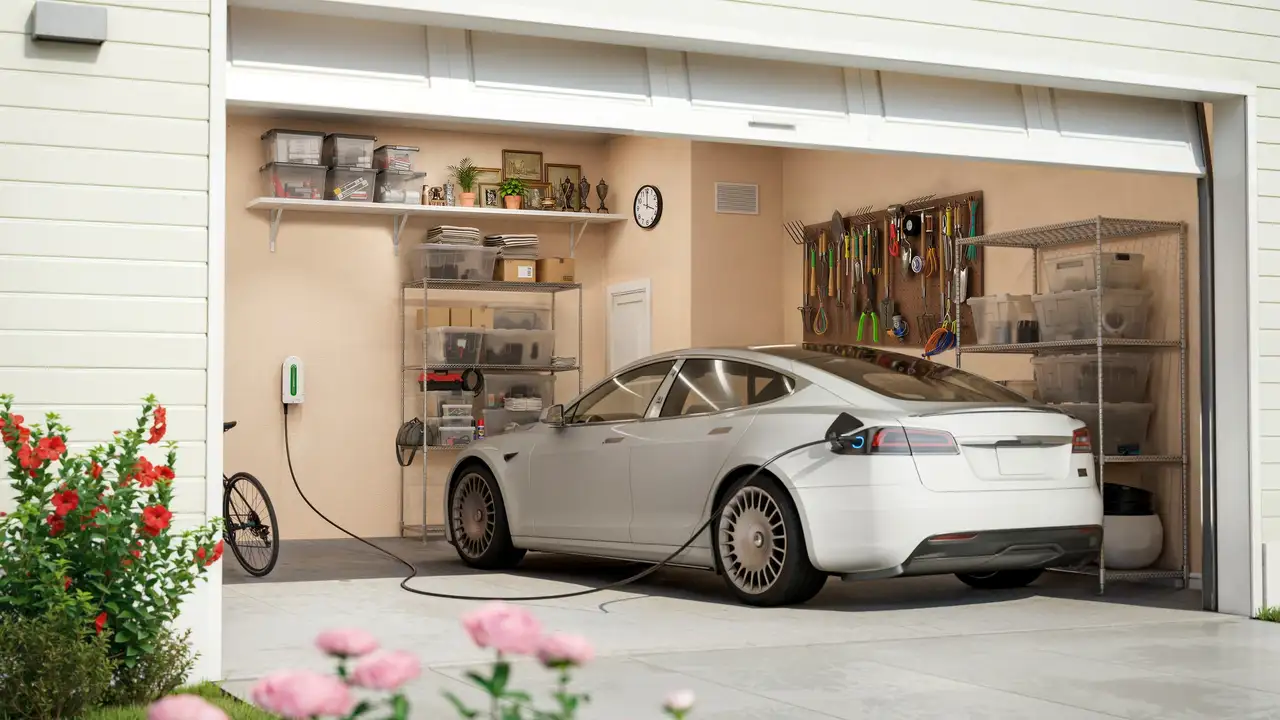
Portable EV Charger for Home or Travel: Which Is Better?
- Home charging – Great for renters or anyone without a dedicated wallbox.
- Road trips – Keeps a charging option in your trunk when public infrastructure is unreliable.
- Camping – Useful where outlets exist but no dedicated EV charging station does.
- Hotels – Helpful when accommodation doesn't offer EV charging.
- Vacation homes – Convenient if you split time between locations.
- Emergency / backup charging – A practical fallback if your primary charger fails.
Type 2 vs. J1772 Portable EV Chargers
Type 2 connectors, standardized under IEC 62196, are widely used across Europe and several other markets, generally supporting single- and three-phase AC charging.
J1772, maintained by SAE International, has long been the standard AC connector for non-Tesla EVs in North America.
It's worth noting that the North American connector landscape has been shifting: a growing number of newer EVs sold in the U.S. and Canada now use the NACS (North American Charging Standard) connector instead of, or alongside, J1772, a trend the U.S. Department of Energy also tracks. If your vehicle uses NACS, you'll want a charger with a compatible connector or adapter rather than a standard J1772 unit.
Neither connector is universal worldwide, and none of them is guaranteed to match every vehicle in a given region. Always confirm which connector matches your specific vehicle's charging inlet before purchasing — our Type 2 vs J1772 connector guide covers this in more detail if you're still deciding.
Common Mistakes When Buying a Portable EV Charger
- Choosing the wrong connector for your vehicle
- Ignoring your vehicle's maximum AC charging rate
- Assuming higher amperage is always better
- Overlooking the actual outlet rating at home
- Buying a cable that's too short for your setup
- Skipping weather protection for outdoor use
- Choosing based on price alone
- Not checking local electrical requirements before use
Who Should Buy a Portable EV Charger?
- EV owners who travel frequently
- Renters without access to permanent installation
- Drivers without a dedicated wallbox
- Anyone who wants a backup charging option
- People who charge across multiple locations (home, work, vacation home)
If you're looking for a portable option for home, travel, or backup charging, an adjustable 6A–32A portable EV charger can offer more flexibility than a fixed installation — letting you match the charging current to whatever outlet is available, whether that's a standard household socket or a higher-capacity connection. Our EVPEIWE portable chargers offer up to 7.2kW output, 8 adjustable current levels, a Type 2 connector, IP65 weather resistance, and up to 8-hour charging schedules, built for compatible Type 2 EVs. You can browse the full lineup on our portable EV charger collection to see which model fits your setup.

Frequently Asked Questions
Are portable EV chargers worth it?
For many drivers, yes. They offer flexibility that a fixed wallbox can't — useful for travel, backup charging, or situations where a permanent installation isn't possible. Whether it's "worth it" depends on your charging habits and living situation.
Can I use a portable EV charger at home?
Yes, as long as you have a compatible outlet and your home's wiring supports the current you plan to use. Many drivers use a portable charger as their primary home charging solution.
Is a 32A portable EV charger better than a 16A charger?
Not necessarily "better" — it depends on your outlet and vehicle. A 32A charger can deliver more power, but only if your electrical setup and vehicle support it. Otherwise, a 16A unit may be the safer, more practical choice.
Can a portable EV charger charge any EV?
Only if the connector matches your vehicle's charging inlet and the vehicle supports AC charging at that connector type. Always confirm compatibility before purchasing.
How long does it take to charge an EV with a portable charger?
Charging time depends on battery size, current charge level, and the charger's power output, as well as your vehicle's onboard charger limit. It can range from a few hours to overnight, depending on these factors.
Can I use a portable EV charger outdoors?
Many portable chargers are designed with IP-rated weather resistance for outdoor use. Check the specific IP rating before charging in rain or direct outdoor exposure.
Do portable EV chargers need to be installed?
No dedicated installation is typically required — most plug directly into a compatible outlet. However, the outlet itself should meet local electrical standards for the current you intend to use.
Can I leave a portable EV charger plugged in?
Generally yes for normal daily use, but the outlet should be rated for continuous load and not shared with other high-draw appliances. Unplug during storms or extreme heat unless the unit is specifically rated for those conditions, and periodically check the cable, plug, and outlet for wear, discoloration, or heat damage.
What is the difference between a portable charger and a wallbox?
A portable charger is movable and typically plugs into an existing outlet, while a wallbox is permanently installed and hardwired, often supporting higher charging speeds.
What size portable EV charger should I buy?
This depends on your outlet's rating, your home's wiring capacity, and your vehicle's maximum AC charging rate. An adjustable-current charger offers more flexibility across different outlets and locations.
This guide is intended for general informational purposes. Always confirm compatibility, electrical requirements, and safety standards with a qualified electrician or your vehicle manufacturer before charging.
1 reactie
good