

Everybody knows electric cars are easy on the owner's wallet when it comes to regular maintenance. They may cost more to buy new than a comparable gas car, but as the miles pile on, there is no need to worry about engine oil changes or emissions checks.
While all of this is true, EVs are not exactly maintenance-free. There might not be an engine under the hood, but EVs still have transmissions, believe it or not. They also have brake fluid, brake pads, and coolant — and all of these need attention over the course of a car's life.
Here is what Tesla requires for the Model 3 to keep the warranty intact, what is not on the company's service schedule but might still be worth doing for the long run, and what the whole thing adds up to over five years.

Why EVs Need Less Maintenance in the First Place
The reason is mechanical simplicity. According to the U.S. Department of Energy's Alternative Fuels Data Center, all-electric vehicles typically require less maintenance than conventional vehicles: the battery, motor, and electronics need little to no regular maintenance, there are fewer fluids like engine oil, brake wear is significantly reduced by regenerative braking, and there are far fewer moving parts than in a conventional fuel engine.
Less maintenance, though, is not the same as none. Here is the full picture for the Model 3.
What Tesla Requires: the Official Model 3 Service Schedule
The list may seem a little too simple for someone who has just switched from a gas or diesel car — and there is no shortage of high-mileage Teslas still going strong with minimal maintenance. Here is what Tesla recommends owners look out for on its best-selling EV:
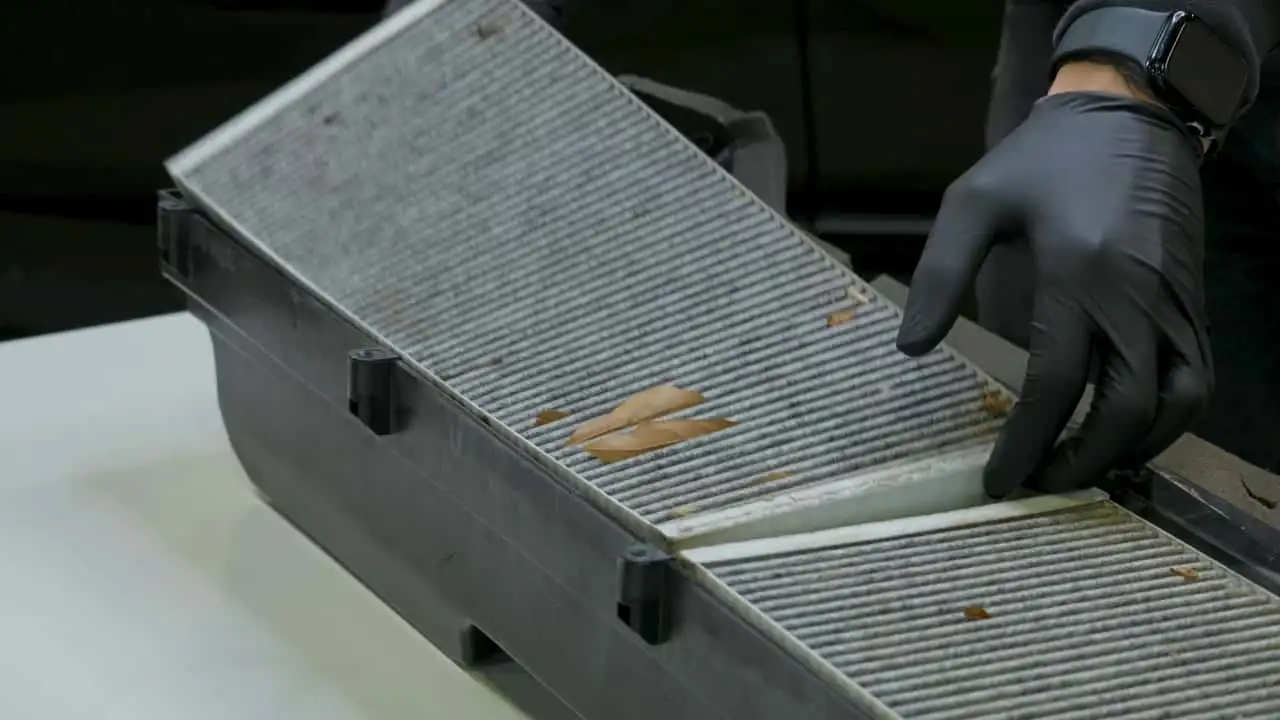
Cabin air filter replacement: every two years. The HEPA filter and carbon filter, for vehicles that have them from the factory, are replaced every three years.
Brake fluid test: every four years. Similar to a combustion vehicle, the Model 3 uses brake fluid to push the brake pads onto the rotors. Brake fluid is hygroscopic — it naturally absorbs moisture from the air. With heavy moisture contamination, hydraulic pressure drops, leading to a softer brake pedal and longer braking distances. The test reveals whether it is still good or needs replacing.
Brake cleaning: every year or every 12,500 miles in areas where roads are salted during winter. Even though all modern EVs use their electric motors to slow down, they still rely on mechanical brakes, and the Model 3 is no different. Tesla recommends cleaning and lubricating the brake calipers, especially for cars in areas where the roads are salted during winter. The thickness of the brake pads also needs checking — though there have been plenty of cases of Teslas with over 100,000 miles on the clock and the original pads still in good condition.
Radiator cleaning: when needed. The Model 3 does not have a hot engine, but it still needs a radiator to keep the thermal system running cool. Depending on where the car is located, debris can build up over time, reducing the radiator's efficiency and limiting the car's performance.
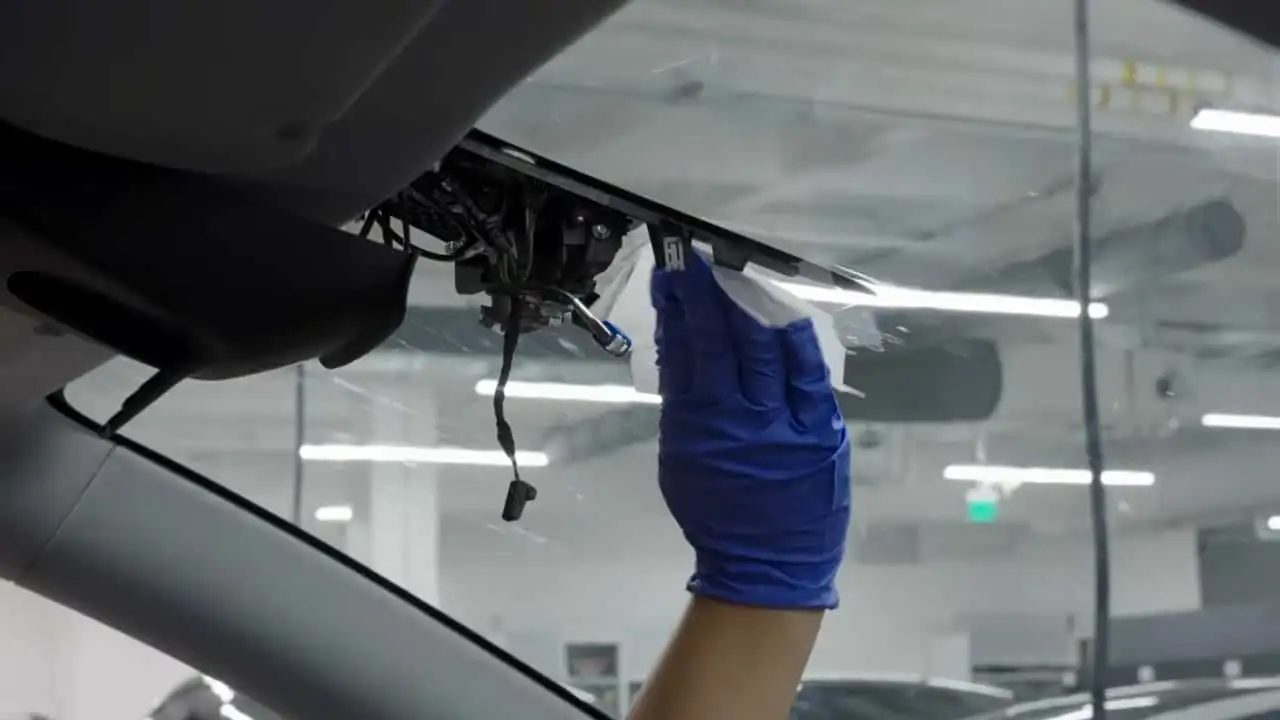
Windshield camera area cleaning: when needed. Tesla's advanced driver assistance systems rely on video cameras to react, but they cannot perform as intended if they are obstructed. Cleaning the inside of the windshield in the camera area is vital for optimal camera function — owners can check whether it is required via the Maintenance tab in the infotainment system.
Tire rotation: every 6,250 miles, or if the difference in tread depth is 2/32 inches or higher. EVs are known for being harder on tires than gas cars, because acceleration and brake regeneration put stress on the rubber. Rotating the tires every 6,250 miles prolongs the life of the set.
This is also when you want to check the tires themselves. Because EVs often wear out tires quicker, keep an eye on tread depth. When it gets below 4/32nds of an inch, it is time to start looking for new tires. If your tread depth is below 2/32nds, replace them immediately — NHTSA's TireWise guidance is blunt about it: tires are not safe and should be replaced when the tread is worn down to 2/32 of an inch.
Wheel balancing: when needed. If the driver notices vibrations in the steering wheel while driving, the wheels may need balancing. With unbalanced tires, handling, tire life, and steering components are affected.
Wheel alignment: when needed. If the vehicle pulls to one side when the steering wheel is straight, or if there is uneven wear on the tires, a wheel alignment may be needed. The procedure is also recommended after installing new tires.
All of the vehicle's maintenance needs can be viewed in the Maintenance Summary on the central touchscreen, which provides a record of when common actions were last performed and recommends when to perform them next. Tesla says all of these items need to be performed at an authorized service center, including servicing the low-voltage and high-voltage batteries.
What Tesla Doesn't Say: Maintenance for the Forever Car
We have all heard of "lifetime fluids," but ask any well-versed mechanic and they will tell you they do not exist. Manufacturers refer to them when it is their job to maintain the car under warranty; after it expires, the owner is on the hook for all repairs — including those that could have been avoided.
The following recommendations appear nowhere in Tesla's maintenance plan, but some technicians still recommend them. They are not required actions, yet Tesla has service procedures for all of them and its service centers can perform them on request.
Drive unit fluid change: between 60,000 and 100,000 miles. Tesla used to recommend changing the transmission fluid in its drive units every 100,000 miles, but that requirement went away. The transmissions — which transfer power from the electric motor to the wheels — now have built-in filters, but plenty of mechanics believe it is good practice to renew the fluid every 100,000 miles at the latest.
Coolant check: every four years. The Model 3 uses coolant to keep the high-voltage battery at an optimal temperature. Just like on a combustion car, it needs to be checked and replaced if contaminated.
Drive unit, steering, and suspension bushes: inspect and replace as needed. Over time, rubber bushes lose their elasticity or even crack. If that happens, knocks and rattles will make their presence felt, requiring a visit to a service center. Tesla has implemented many manufacturing novelties over time, but it still has not figured out how to replace the age-old rubber bushes found in all cars.
Where to Service the Model 3
Under warranty, Tesla's authorized service centers should handle all maintenance items. After the warranty expires, many of the actions on this list can be done at home — air filter changes and radiator cleaning are DIY jobs that should not take hours, even for first-timers.
Best of all, Tesla has published all of its service manuals online, and anyone can follow the procedures. In recent years, plenty of independent EV shops have popped up, and they can usually handle repairs and maintenance at lower costs than Tesla. That said, Tesla's own shops will happily inspect and repair older models, too.

The Five-Year Reality Check
Keeping an EV on the road should be much cheaper than a gas car, but it still requires some maintenance. Over a five-year period, the main items for a Model 3 should include:
- At least one set of new tires
- Multiple tire rotations
- Two brake fluid tests — and maybe one flush
- Two cabin air filter replacements
- Several brake checks
- At least one set of wiper blades
None of it involves an engine, a gearbox service, spark plugs, or an emissions test. That is still a dramatically shorter list than any gas car's.
The Long Game: Maintenance and Battery Health
The reason "forever car" owners go beyond the official schedule is simple: the most expensive component in an EV is the battery, and everything that keeps the car healthy for a decade protects that asset too. If you are shopping secondhand instead, our used EV battery health check guide shows you how to verify what condition that battery is actually in before you buy.
And if you doubt that EVs can genuinely go the distance with minimal servicing, consider the real-world evidence: Ford's study of roughly 36,000 Mustang Mach-Es after five years found battery health holding up impressively well, which we covered in our breakdown of that 36,000-car battery study. The Model 3 tells the same story: a short service schedule, a long service life — as long as you actually follow the schedule.
FAQ
Does a Tesla Model 3 need oil changes?
No. There is no engine under the hood, so there are no engine oil changes or emissions checks. But the Model 3 is not maintenance-free: it still has a transmission, brake fluid, brake pads, and coolant that need attention over the car's life.
How often should brake fluid be checked on a Model 3?
Every four years. Brake fluid is hygroscopic — it naturally absorbs moisture from the air — and heavy contamination drops hydraulic pressure, leading to a softer pedal and longer braking distances. A test reveals whether it is still good or needs replacing.
How often should I rotate the tires?
Every 6,250 miles, or if the difference in tread depth is 2/32 inches or higher. Below 4/32nds of an inch, start looking for new tires; below 2/32nds, replace them immediately.
How often do the cabin filters need replacing?
The cabin air filter every two years, and the HEPA and carbon filters every three years for vehicles that have them from the factory.
Do I have to service my Model 3 at Tesla?
While under warranty, Tesla's authorized service centers should handle all maintenance items, including the low- and high-voltage batteries. After the warranty expires, many jobs — air filter changes and radiator cleaning, for example — are simple DIY tasks, and Tesla has published all of its service manuals online. Independent EV shops, which have proliferated in recent years, can usually handle repairs at lower costs.
Does the drive unit fluid really never need changing?
Tesla no longer requires it, and the transmissions have built-in filters — but plenty of mechanics believe it is good practice to renew the fluid every 100,000 miles at the latest. Tesla has service procedures for it and will perform the change if the owner asks.